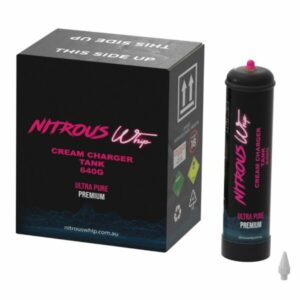
Whipped lotion looks simple on the plate, however it is among the best demonstrations of physics and chemistry you'll satisfy in a cooking area. A slim dairy products liquid transforms right into a billowy foam that holds its shape, brings taste, and thaws on the tongue. Behind that magic lies nitrous oxide, high pressure, and the microstructure of fat. If you have actually ever questioned why a cylinder of gas can transform lotion right into clouds, or why one set slumps while another stands tall, you remain in the right area. This is a functioning cook's look under the hood of whipped cream chargers, what N2O does, and exactly how to obtain one of the most out of it.
Foam, from a chef's point of view
All foams are scaffolds of gas bubbles caught in a liquid or strong network. With whipped lotion, the network is mostly fat droplets and milk proteins, supported by little quantities of emulsifiers and, often, added sugar. Gas lightens the structure and lifts it, but it's the fragile balance of fat crystalline structures and healthy proteins that keeps the bubbles from popping. If you have actually ever before overwhipped and finished with an oily, broken mess, you viewed that network collapse as fat accumulated right into butter.
There are several ways to get gas right into lotion. You can blend air by hand, use a stand mixer, or use an iSi-style dispenser with a nitrous oxide cartridge. The end looks comparable, but the devices differ in essential methods. Mechanical whipping slowly folds up air right into the lotion and breaks fat beads apart, exposing hydrophobic surfaces that latch with each other around droplets of air. N2O cream chargers take a shortcut. They liquify gas right into the lotion under pressure, after that release it all at the same time, expanding into numerous microbubbles through the nozzle. Done appropriately, the foam is finer, even more steady, and commonly silkier than hand-whipped cream.

What N2O is doing inside the canister
Nitrous oxide is a tiny, nonpolar particle with useful traits for foams. It's even more soluble in fat and water than air, so the lotion takes in a lot of it while under stress. When the valve opens, pressure declines and the liquified gas comes out of remedy as bubbles. Think of a drunk soda bottle, but with fat and healthy proteins ready to support the sudden fizz.
Why N2O instead of carbon dioxide or air? Three factors matter in practice.
First, solubility. N2O liquifies right into cream a minimum of numerous times far better than oxygen or nitrogen at the very same pressure. Much more dissolved gas, even more foam on release.
Second, taste and chemistry. Carbon dioxide develops carbonic acid in water, which decreases pH and offers an irritable, sour note. That result can curdle dairy products and mute fragile flavors. Nitrous oxide is neutral in taste and does not acidify the cream, so vanilla tastes like vanilla and dairy products keeps its sweetness.
Third, fat affinity. N2O communicates favorably with the fat stage, assisting maintain microbubbles as the foam forms. Air does not have that benefit. The result is a better bubble distribution and a foam that holds lines and angles longer.
When you bill a dispenser with whipped cream chargers, you're keeping power as pressure. The cartridge, generally 8 grams of gas, punctures and launches N2O into the secured canister. Shaking after charging spreads the gas into the cream, raising contact location and speeding dissolution. When you pull the lever, the headspace stress drives lotion through the little nozzle. The pressure decline triggers rapid gas growth and the cream flashes right into foam.
Fat material and the architecture of a steady foam
Cream with 35 to 40 percent fat makes the most trustworthy pressurized foam. Below approximately 30 percent fat, the network can not sustain much gas and the foam weeps swiftly. Above 40 percent, you may get a rich framework that verges on butter if you're not gentle. Specialist pastry cooks frequently start with whipping cream at 36 to 38 percent fat therefore: it balances security with lightness.
Fat crystals form at refrigerator temperature levels, which matters for foam quality. Chilled cream has partly taken shape fat globules that interlace like little velcro hooks around bubbles. Warm lotion, despite having the right fat percentage, stops working to build the exact same framework and has a tendency to exude. Keep cream and the dispenser cold, preferably around 2 to 5 C. If the kitchen area runs hot, stash the charged container in the fridge for 15 minutes prior to service.
Sugar transforms the image also. It increases viscosity and slows drainage in between bubbles, which helps stability. Powdered sugar, with its tiny fragment size and food starch, integrates a lot more quickly than granulated sugar and thickens a little. For unsweetened applications, a pinch of milk powder (1 to 2 percent by weight) presents additional healthy proteins that boost foam toughness without adding sweetness.
Stabilizers like jelly, agar, or xanthan gum can be used in little amounts when you need extreme hold. A timeless trick for cozy kitchen areas: bloom jelly in lotion, delicately heat to liquify, then awesome totally prior to charging. You trade a touch of wobble for longer shelf life on the pass.
Inside the dispenser: a small pressure lab
A lotion whipper works like a miniature stress reactor with food-grade components. The container body holds the fluid cream. The head houses a piercer for the cartridge, a shutoff, and a nozzle that forms the flow. Seals, typically silicone or similar, keep pressure from running away around the threads. Most professional models specify an optimal number of chargers and have safety and security shutoffs to vent if pressure runs also high.
Common sizes vary from 0.25 to 1 liter. Pay attention to fill up lines. Overfilling leaves insufficient headspace for gas and can cause sputtering rather than foam. Underfilling wastes gas and can offer loosened, damp foam because the pressure profile shifts as the canister clears. For a half-liter canister, one battery charger is conventional for fundamental whipped cream. Some chefs make use of a second battery charger for ultra-fine foam, however the returns diminish and appearance can border on weak if overpressurized. Manufacturer assistance must take precedence.
Nozzle geometry issues. A narrow pointer creates greater shear, creating a tighter bubble distribution. A celebrity idea introduces ridges that increase surface and viewed lightness. For sauces and foams that should nappe a spoon, select a slightly wider idea to minimize shear and coarser bubbles.
Why N2O cream chargers change mouthfeel
Pressurized foams created by N2O cream chargers have a tendency to be smoother than hand-whipped due to smaller, more consistent bubbles. That adjustment in bubble dimension changes exactly how the foam breaks down on the tongue. Smaller sized bubbles stand out with much less violence, releasing taste much more progressively and finish taste with fat in a thin, also film. The result is an assumption of silk as opposed to froth.
There's also the temperature level impact. Gas expansion cools down the foam slightly by adiabatic development, so the initial glob usually tastes cooler and cleaner than cream at the very same refrigerator temperature level. That fleeting chill can sharpen vanilla notes and comparison with warm desserts. You see the same physics when a siphon gives an espumas-style warm foam over a steak, though there the liquid is hot and the gas development effect softens the heat spike.
Whipped cream chargers: what they are and exactly how to pick them
Cream battery chargers, likewise called whipped cream chargers or N2O cream chargers, are secured steel bulbs containing laughing gas, commonly 8 grams. Some brands provide 10, 12, or perhaps larger cylinders made for high-volume cooking areas, however the concept is the same: food-grade N2O under stress. The steel wall surfaces are crafted to prevent corrosion and tear, and the cap seals the gas up until punctured by the dispenser.
Not all battery chargers are equal. Food-grade pureness matters, as trace oils or lubes will certainly taint cream. Reputable brands publish purity specifications and batch screening outcomes. If a charger scents off when released vacant right into the air, don't utilize it. Cost correlates freely with quality, however I have actually dealt with spending plan battery chargers that executed well and premium ones that sputtered. What counts: constant fill mass, clean gas, and no metal flavor.
Storage and handling are easy. Keep battery chargers completely dry, at space temperature level, and away from warm. Do not pierce or replenish them. Never ever use damaged or rusty battery chargers. If a charger jams in the owner, do not require the threads, back off and reseat meticulously to avoid cross-threading the dispenser head.
Technique: from liquid to soaring peaks
Here is a concise process that provides constant results, service after service.
- Chill everything. Lotion at 2 to 5 C, dispenser cold, nozzle cold. Warm steel dulls performance. Sweeten and taste the cream prior to billing. If making use of vanilla, scuff the sheath and pressure to prevent clogging. Fill just to the significant line. Clean the edge, seat the head, and check the gasket. Charge with one Nitrous Oxide lotion battery charger. Shake securely 5 to 8 times, vertical orientation, to spread gas. Relax in the refrigerator for 10 to 15 mins if time allows. Dispense with the container inverted. Press delicately. If the initial press sputters fluid, shake 2 more times and attempt again.
That's one checklist. It gains its place due to the fact that skipping any of those actions expenses appearance or stability.
Troubleshooting foam that misbehaves
A few problems repeat across kitchen areas. The fix generally begins with fundamentals.
If the foam sputters liquid, either the lotion is as well warm, the dispenser is undercharged, or you overfilled the container. Chill the container and attempt a few more shakes. If you https://sgp1.digitaloceanspaces.com/nangsta/nangsdelivery/nang-delivery-melbourne/fast-effective-and-reliable-the-new-age-of-nangs-delivery-in-melbourne.html already utilized one charger, a second can assist, yet check the fill degree initially. Likewise confirm the nozzle is completely seated.
If the foam is as well stiff and burglarize portions, fat web content may be high or the lotion partially spun. Switch to a slightly lower fat percentage or decrease shaking. Take care with double-charging a little cylinder, which can overaerate. If you included jelly, you may have used too much or allow the foam sit also long at reduced temperature. Rebalance the stabilizer.
If the foam falls down quickly on home plate, fat is as well low, temperature level too high, or sugar missing. Go for 36 to 38 percent fat, cool, and add 8 to 12 percent powdered sugar by weight for treat applications. For full-flavored foams, change sugar with a pinch of xanthan, regarding 0.1 to 0.2 percent, or milk powder at 1 to 2 percent.
If the foam has off flavors, think the battery chargers or a dirty dispenser. Take the head apart, wash every removable component, soak the nozzle and shutoff parts, and dry thoroughly. Rinse all taste enhancements with a great filter prior to loading, specifically citrus enthusiasm and vanilla seeds.
Beyond milk: different bases that still behave
N2O collaborates with greater than cream. The gas does not care much about taste, only about solubility and the fluid's ability to develop a network around bubbles.
Coconut lotion, specifically the thick component from full-fat cans, whips magnificently if cooled hard. Maintain with a percentage of powdered sugar or a whisper of agar to maintain it from thawing under warm lights. Soy and oat bases can collaborate with included fat. A blend with cocoa butter or coconut oil, emulsified with lecithin, offers sufficient framework for fine-bubbled foams.
For fruit foams, include gelatin or agar. Fruit purées do not have fat and solid healthy proteins, so you require a gelling agent or a healthy protein such as aquafaba. An easy strawberry espuma: 500 grams mix, 60 grams sugar, 4 grams gelatin, a pinch of salt. Warm to liquify, strain, cool, fee, and rest for half an hour. The result brings intense taste with a mousse-like body, tidy and light.
Chocolate foams can utilize cocoa butter as the maintaining fat. Blend 200 grams heavy cream with 120 grams 60 to 70 percent chocolate and a touch of sugar syrup, warm until smooth, pressure, cool, and cost. Below, the fat formation from the cocoa butter groups with dairy fat to secure bubbles.
Gas option and food safety
Nitrous oxide is taken into consideration safe at culinary concentrations. It is used extensively for whipping and for product packaging some foods to displace oxygen. That claimed, treat pressurized gases with regard. Do not breathe in from battery chargers or the dispenser, which is both unsafe and less than professional. Only food-grade gas belongs touching components. Do not substitute CO2 cartridges for whipped cream, unless you're going for a deliberately zesty foam and are planned for curdling. For carbonation of drinks, carbon dioxide is perfect. For lotion, N2O continues to be the standard.
Keep an eye on expiration dates for cream, except battery chargers. The gas does not spoil, however dairy products does. Label charged cylinders with time and materials, specifically if you rotate several foams during service. Several kitchens hold whipped cream for approximately 3 days under refrigeration, yet top quality starts to glide after day two as water drains pipes and aromas fade. Shake the cylinder briefly before each solution to redistribute.
The physics of bubbles you can taste
Under the microscope, a good whipped cream appears like a gathered galaxy. Bubbles sit in a matrix, kissing at points where slim liquid films satisfy. In time, gravity and surface area stress cause 2 slow forms of degeneration: drainage and coarsening. Drain is fluid leaking out of the films, which thins the walls until they pop. Coarsening, or Ostwald ripening, occurs since gas diffuses from smaller bubbles right into bigger ones, driven by pressure differences. That is why a fragile foam comes to be rugged gradually even if it doesn't melt outright.
How do you counter those forces?
- Increase thickness slightly so liquid drains much more slowly. Sugar, milk powder, or percentages of hydrocolloids help. Keep it chilly, which reduces diffusion and fat softening. Start with tiny, uniform bubbles. N2O in a well-tuned dispenser succeeds here. Serve immediately. Home plate is not a refrigerator.
That second checklist earns its maintain due to the fact that it condenses physics right into actions you can take throughout service.
Energy, stress, and the snap of the nozzle
When you depress the lever, a little valve opens up and the pressure difference drives flow. The shear inside the nozzle establishes the final bubble dimension. Shear straightens fat crystals and stretches proteins, after that the unexpected growth fractures the movie into a velour of microbubbles. It feels like a lot of dramatization for a little opening, but that moment creates the texture you taste.
The hiss you listen to is not simply gas; it's a mingled thrill of lotion and N2O unmixing as pressure drops. Brief bursts give even more control than long presses. Angle matters too. Dispense with the canister inverted so the liquid cream, not gas alone, gets to the shutoff. A nearly empty canister has a tendency to spew gas pockets in between fluid spurts. You can smooth that by drinking when and tilting somewhat to maintain the intake submerged.
Flavor method: beyond vanilla
Whipped lotion shines because it lugs fragrance compounds in fat. Vanilla is traditional, but the method supports a larger palette.
Coffee lovers can instill lotion with smashed beans, warmth gently to 70 C, hold for 30 minutes, after that cool and strain thoroughly prior to charging. Citrus enthusiasm works if you value the strainer. Natural notes from basil or mint need restraint; steep briefly, or you'll divert into toothpaste. Boozy creams are feasible, yet alcohol thins the matrix and destabilizes foam. Keep complete alcohol under 2 to 3 percent by weight, or use alcohol's taste using casts and extracts while keeping the liquid enhancement small.
Cocoa powder needs mindful dispersion to avoid obstructing. Filter and flower in a little cozy lotion, after that mix back, pressure, and continue. Sugar creams benefit from a pinch of salt and a touch of sugar or corn syrup, which minimizes recrystallization and maintains structure smooth.
Maintenance, cleaning, and safety and security habits that maintain you out of trouble
Treat the dispenser like an item of precision equipment. After each service, vent pressure safely by giving into an empty container till the hiss quits. Unscrew the head, eliminate the gasket, get the shutoff elements, and clean everything in cozy, soapy water. Use a tiny brush for the nozzle and the shutoff channel. Rinse and air dry totally. Recurring milk supports bacterial growth and rancidity, and microscopic movies of fat can create seals to slip.
Inspect gaskets for nicks or rigidity. Replace them on time, not when they lastly fall short during a thrill. If a canister ever before takes a fall from the counter, look for dents. Pressure vessels and damages do not blend. Most manufacturers advise retiring dinged up bodies immediately.
Do not warm a packed dispenser on the cooktop or in a water bathroom unless the model is especially rated for warm foams and you understand the limits. Heat raises stress. If you require a cozy espuma, usage recipes and tools developed for that function and screen temperature level very closely, normally staying under 70 C for both food safety and security and tools integrity.
Buying pointers and honest trade-offs
When choosing whipped cream chargers and dispensers, begin with your result demands. An active bread terminal take advantage of a one-liter dispenser for volume and consistency across dozens of plates. A little café could prefer a half-liter for faster turnover and fresher foam. Light weight aluminum bodies are lighter and stand up to corrosion, stainless steel is durable and much better for warm applications. Both can do at a high level when coupled with quality seals.
As for cream chargers, stick to vendors who record food-grade N2O and consistent fill weights. Combined great deals or imitation chargers show up more often than you would certainly think, and they can foul flavor or underdeliver gas. If an offer seems also good to be true, it probably is. Branded Nitrous Oxide cream chargers with traceability cost a little bit a lot more, however you obtain what you pay for: reliability in the middle of a dinner service.
There's a genuine trade-off between the love of hand-whipped cream and the accuracy of an N2O system. Hand-whipped heights bring air and a looser bubble structure that some diners locate sentimental. N2O foam is cleaner, a lot more consistent, and extra flexible, specifically when you develop flavors beyond dairy products. For a rustic shortcake at a farmhouse inn, I could reach for a whisk and a chilly bowl. For a sampling menu where every second and millimeter of piping counts, I load the dispenser.
Edge cases and smart hacks
Small modifications pay big dividends. If your lotion is ideal on the edge of stability, a half percent of gelatin, set and after that gently mixed prior to filling up, will certainly acquire you time under warm lights. For vegan solution, a blend of coconut cream with a little addition of polished coconut oil and 0.2 percent xanthan gives a framework that behaves closer to milk. Strain every little thing. I can not stress that enough. One roaming vanilla seed in the shutoff damages a service.
If you operate at altitude, expect lower exterior air pressure, which a little transforms foam expansion. You may locate a solitary battery charger produces a looser foam than mixed-up level. Adjust with an extra shake or, rarely, a 2nd battery charger, but see appearance carefully.
If you desire defined ridges for piping, chill the plate. A chilly surface slows down water drainage and establishes the form. If you want the lotion to merge coffee or warm chocolate, give currently of service and let the temperature level gradient do the work. The foam shields itself for a few seconds, after that caves with dignity without slicks of oil, which is the characteristic of proper fat balance.